Quarrying
Taj Mahal Quartzite Is Named After a Monument in India. It Is Quarried in Brazil.
The name causes more confusion than any other stone on the market. Where this quartzite actually comes from, how it formed, and what a trade name can and cannot tell you.
Shared Originally published by Compiled from published supplier geological notes
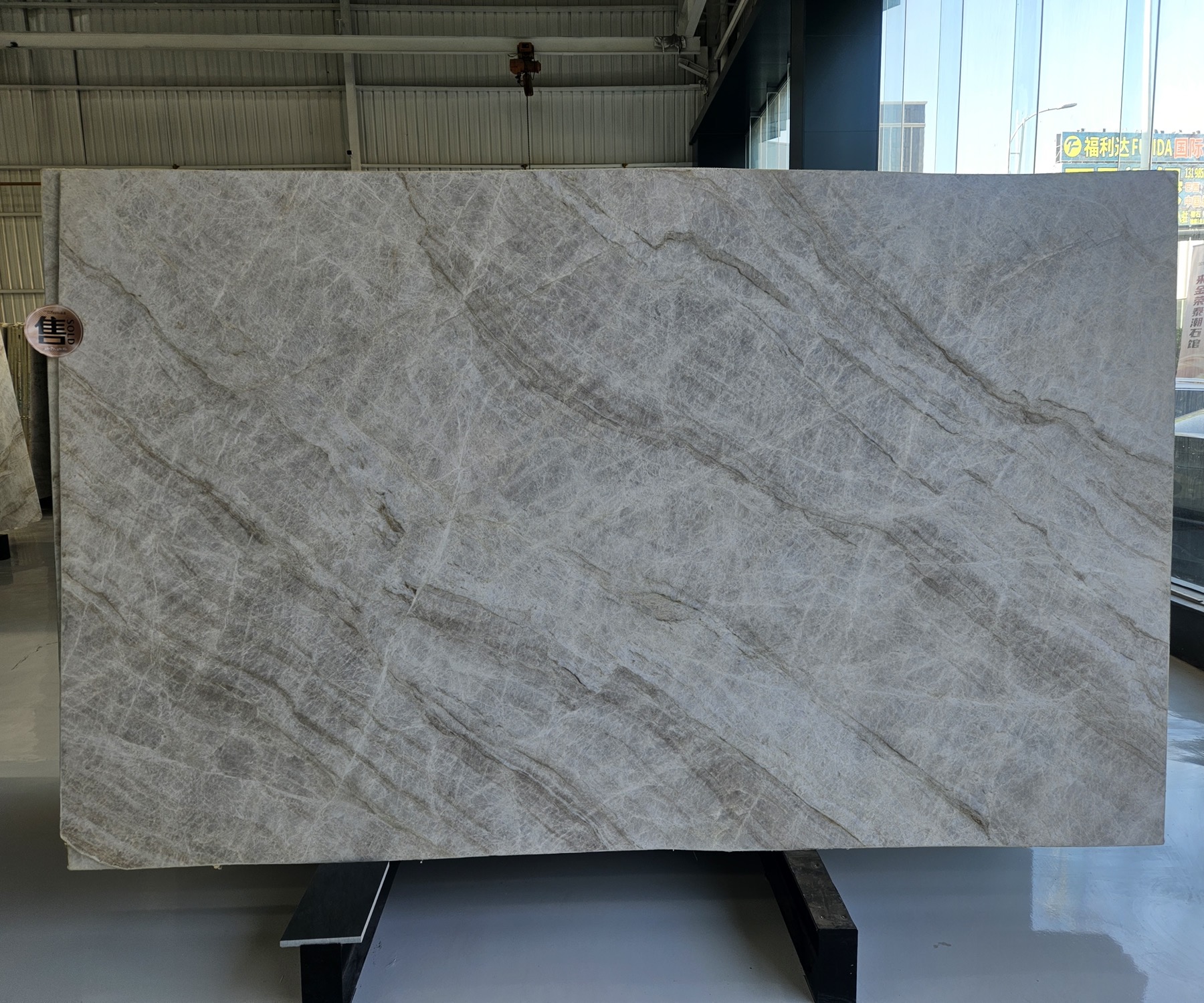
A buyer in Europe asks for Taj Mahal Quartzite. A buyer in Sydney asks for the same. What arrives in both cases comes from one region of Brazil, and it has no geological relationship to the monument the name comes from.
This is not pedantry. It comes up in almost every conversation we have with a new customer, and a buyer who assumes the stone is Indian will ask the wrong questions about the wrong things. Here is the origin story as the trade publishes it, and what it means when you are specifying.
Where it actually comes from
The published sources are consistent: this quartzite comes from Brazil, and more specifically from the Uruoca region, which several suppliers describe as the exclusive source.
So when a supplier tells you the stone is Brazilian, and you asked for a name that sounds Indian, both of you are right. The name is commercial. The geology is Brazilian.
How the stone formed
Quartzite is not sedimentary. It is quartz-rich sandstone that has been through metamorphism — heat and pressure over a geological timescale until the sandstone transformed in both structure and appearance.
This is why it is classified as a true quartzite: it has completed its rock cycle. That is also where the hardness comes from, and why the long metamorphism is credited with making this stone stronger and more durable than granite.
Why the name is what it is
The commercial name is borrowed from one of India’s most recognisable monuments, a UNESCO World Heritage Site. The borrowing does not indicate origin — plenty of traded materials carry a name with no geological connection to where they came from.
If origin matters to your project, specify the country of origin rather than relying on the trade name. If you need provenance documentation for a tender or a client specification, ask for it in writing before you order, not after.
What a trade name can and cannot tell you
A trade name tells you what a supplier sells under. It does not tell you where the material was extracted, which quarry it came from, or whether the lot you receive will match the lot somebody else received six months ago.
For a single-variety stone like this one, that distinction matters more than usual, because the entire point of working with one variety is that you know what you are getting. Ask for the origin, and ask to see the actual slabs before you commit to a large run.
What we can tell you
We publish the origin on our product specifications rather than leaving it in a data sheet, and we can tell you which lot is on the floor at the moment. If you need documentation for a tender or a client specification, say so when you ask for the quotation and we will tell you plainly what we can supply and what we cannot.
What the trade is currently saying
These are the figures other suppliers and fabricators are publishing right now. We list them with their source so you can see where each number comes from, and so the people who published them can see they were used honestly.
- Though quarried in Brazil, this quartzite is named after one of India’s most iconic structures — and it hails exclusively from Uruoca, a city in Brazil blessed with geological abundance that provides the ideal conditions for this stone to form. — Ultra Stones, New York Read the original
- Quartzite is formed through the metamorphism of quartz-rich sandstone, in which the sandstone transforms gradually in both structure and look after being exposed to intense heat and pressure for decades. — Ultra Stones, New York Read the original
- There are only two quartzites considered to be the most authentic, and Taj Mahal is one of them; it is described as a true quartzite because the stone has completed its rock cycle, becoming more refined and compact in structure. — Ultra Stones, New York Read the original
- Taj Mahal is named after one of the most important monuments in India, a UNESCO World Heritage Site, but the material itself comes from Brazil. — Marmi Rossi, Italy Read the original
Where to go next
Questions this article answers
Who does Taj Mahal Quartzite sell to?
We supply importers, stone distributors, fabricators, quarries and project developers who buy Taj Mahal Quartzite in slabs, tiles or cut-to-size pieces. We work on the China side: the stone is bought from the mine, processed in Shuitou or Yunfu, inspected before loading and shipped FOB.
What is the minimum order quantity?
One mixed container for a first order. There is no per-piece minimum, and slab quantities can be split across a book-matched pair or an offcut depending on the job.
What thickness and finish are available?
Slabs are typically 18 mm and 20 mm, with 15 mm and 30 mm available. Common finishes are honed, polished, flamed, brushed, sandblasted and leathered. Tiles are produced in standard and large formats.
How long does production take?
Seven to fifteen working days after the deposit, depending on the form and finish. Cutting, edge profiling and surface treatment are the steps that set the pace, not the stone itself.
Which ports do you ship from?
Xiamen, Quanzhou, Ningbo and Shanghai. We quote FOB to the port you nominate and compare forwarders before booking.
Do you publish a price list?
No. Natural stone moves with the block, the grade, the finish and the market, so a number printed on a website is out of date by the time it is read. Send us the form, thickness, finish, size and quantity and we quote FOB in writing against that specification.
Can we get a sample before ordering?
Yes. We cut a sample from the same block as your order - an A4 hand sample, a book-matched pair or an offcut - and ship it by courier. There is no obligation to order afterwards.
Filed under Quarrying